Vad är skillnaden mellan budget och prognos?
Budget och prognos fyller olika funktioner i ekonomistyrningen: budgeten sätter riktningen, medan prognosen hjälper företag att fatta bättre beslut när verksamheten förändras. Här går vi igenom hur de används för att skapa bättre kontroll över ekonomi, kassaflöde och beslut.
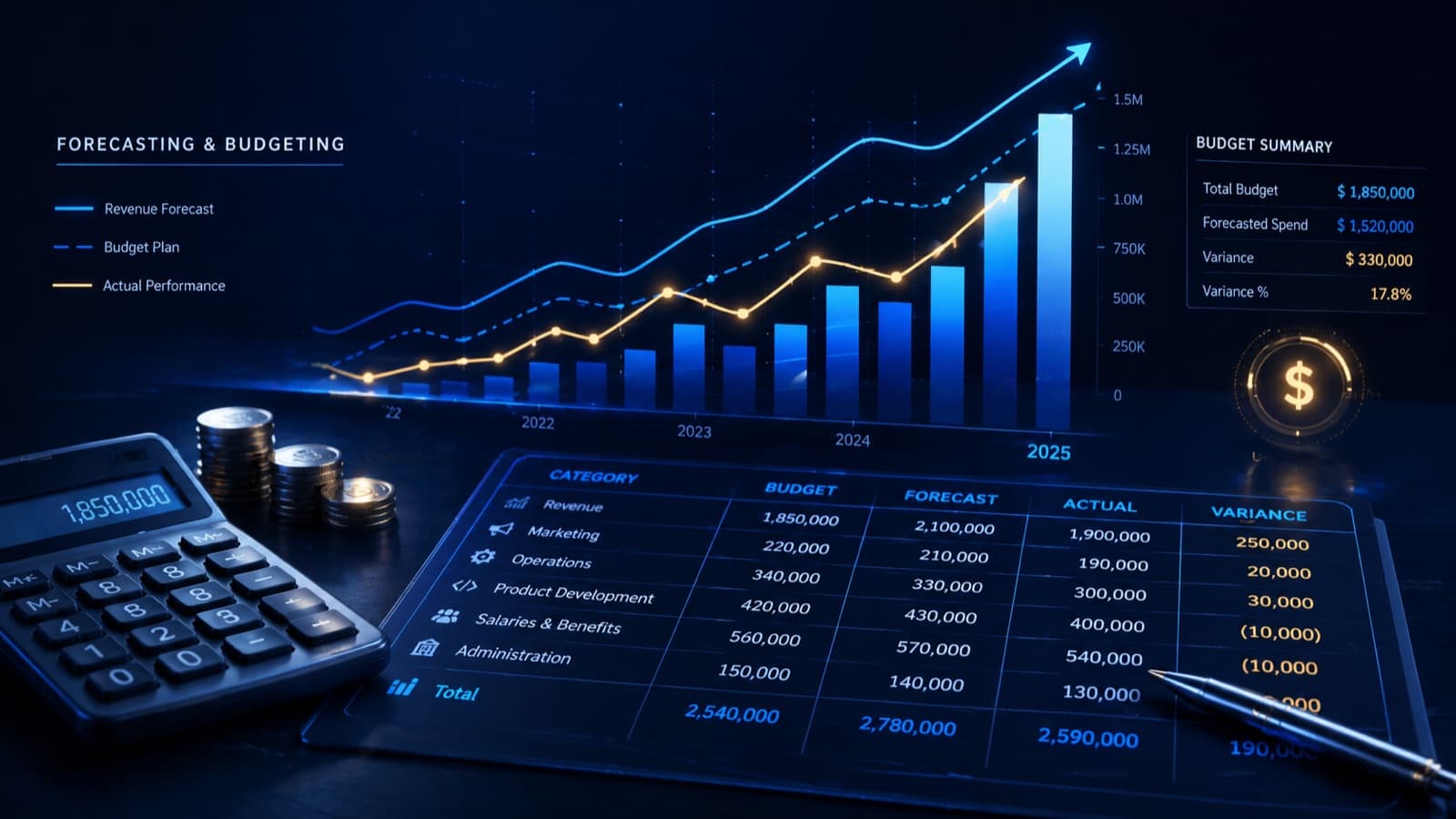
Skillnaden mellan budget och prognos kan sammanfattas enkelt: Budgeten visar hur verksamheten är tänkt att utvecklas. Prognosen visar hur verksamheten förväntas utvecklas, baserat på verkliga utfall och aktuella förutsättningar.
När försäljning, kostnader eller kassaflöde förändras blir budgeten snabbt inaktuell. Det är här prognosen kommer in.
Medan en budget fungerar som en plan över förväntade intäkter och kostnader under en period, görs prognoser löpande under året och visar hur verksamheten förväntas utvecklas utifrån aktuella siffror och förutsättningar.
Företag som arbetar med både budget och prognos får bättre förutsättningar för att ta beslut och planera för framtida utmaningar och möjligheter.
Vad är en budget?
En budget är en plan över förväntade intäkter och kostnader under en viss period. Budgeten bygger på:
- Affärsmål
- Antaganden om framtiden
- Historiska siffror
- Förutsättningar på marknaden
Den används för att:
- Sätta riktning för verksamheten.
- Fördela resurser
- Skapa struktur och tydlighet
Budgeten hjälper företag att planera verksamheten och skapa en tydlig bild av förväntade intäkter och kostnader under året.
Vad är en prognos?
Till skillnad från budgeten används prognosen som ett löpande beslutsunderlag.
En prognos är en uppskattning av företagets framtida utveckling under en viss period, där faktiska resultat vägs in. Till skillnad från budgeten är prognosen dynamisk. Den justeras löpande baserat på:
- Faktiska siffror
- Nya förutsättningar
- Förändringar i verksamheten eller på marknaden.
Den svarar på frågor som:
- Hur ser ekonomin ut framåt baserat på det som händer just nu?
- Kommer vi nå våra mål — eller behöver vi justera?
- Hur påverkas kassaflödet de kommande månaderna?
Prognosen är med andra ord ett verktyg för att fatta bättre beslut.
Därför behöver ditt företag en prognos
I många bolag läggs stort fokus på budgetarbete, men betydligt mindre på löpande prognoser. Detta leder ofta till fler problem på sikt.
Problemet är att budgeten snabbt kan bli inaktuell när verksamheten förändras. Utan prognoser riskerar företag att upptäcka problem först när de redan påverkat ekonomin. Det kan leda till:
- Kassaflödesbrist trots hög omsättning
- Felaktiga investeringar
- Osäkerhet i beslut
- Svårigheter att planera tillväxt
Löpande prognoser gör det möjligt att identifiera kassaflödesrisker och avvikelser tidigare.
Problemet med manuellt budget- och prognosarbete
Många företag arbetar fortfarande med budgetar och prognoser manuellt. Siffror exporteras från olika system och sammanställs i kalkylblad.
Problemet är att arbetet snabbt blir mer tidskrävande ju mer verksamheten växer och förändras. Prognoser riskerar att bli inaktuella redan kort efter att de uppdaterats, samtidigt som manuell hantering ökar risken för fel och gör det svårare att få en tydlig helhetsbild av verksamheten.
MinCFO hjälper företag att automatisera budget- och prognosarbete som tidigare har behövt göras manuellt. Genom löpande uppdaterad data och realtidsbaserad uppföljning direkt i vårt analysverktyg kan företag arbeta mer effektivt med budget och prognoser, utan att manuellt behöva uppdatera rapporter varje vecka eller månad.
På så sätt blir det enklare att följa verksamhetens utveckling löpande och upptäcka avvikelser tidigare, och samtidigt lägga mindre på manuellt administrativt arbete.
Ett konkret exempel
Tänk dig att du har budgeterat:
- Intäkter: 500 000 kr/månad
- Kostnader: 400 000 kr/månad
Men i verkligheten händer följande:
- En stor kund betalar sent
- En kostnad ökar oväntat
- Försäljningen dippar en månad
Utan prognos märker du problemet först när det redan påverkat kassaflödet. Med en prognos kan du förutse problem och agera i tid.
Sammanfattning: budget vs prognos
- Budget och prognos är två av de viktigaste verktygen inom ekonomistyrning. .
- Budgeten hjälper företag att planera långsiktigt.
- Prognosen visar hur verksamheten utvecklas utifrån aktuella siffror och förändrade förutsättningar.
- Utan prognoser riskerar du att fatta beslut baserat på en bild av verkligheten som inte längre stämmer. Med prognoser kan du istället agera i tid.
Vill du få bättre kontroll över företagets ekonomi?
MinCFO är byggt för företag som behöver mer än en traditionell redovisningsbyrå. Idag har vi hjälpt över 60 företag att automatisera ekonomisk uppföljning och arbeta mer datadrivet med budget och prognoser.
Med automatiserade processer och löpande uppdaterad data blir det enklare att följa verksamhetens utveckling i realtid, upptäcka avvikelser tidigare och få tydligare beslutsunderlag, utan att lägga lika mycket tid på manuellt administrativt arbete.
Vill du veta mer? Boka ett möte med oss.
Vanliga frågor om budget och prognos
Vad är skillnaden mellan budget och prognos?
Budgeten är en plan över förväntade intäkter och kostnader under en period. Prognosen följer upp budgeten under året och visar hur verksamheten förväntas utvecklas utifrån aktuella siffror och förutsättningar.
Behöver alla företag budget och prognos?
Ja. Budget och prognos fyller olika funktioner. Budgeten hjälper företag att planera verksamheten och sätta mål, medan prognosen visar hur verksamheten faktiskt utvecklas under året utifrån aktuella siffror och förändrade förutsättningar.
Företag som arbetar med båda får bättre kontroll över ekonomin och bättre underlag för att fatta beslut i tid.
Hur kan företag arbeta mer effektivt med budget och prognosarbete?
Genom att automatisera delar av arbetet kan företag minska administrationen och få bättre överblick över verksamheten. Moderna plattformar som MinCFO gör det möjligt att arbeta mer löpande med budget, prognoser och ekonomisk uppföljning.
Hur ofta bör företag uppdatera en prognos?
En prognos bör uppdateras månadsvis eller kvartalsvis för att förbli aktuell.
Vad är rullande prognoser och hur funkar de?
Rullande prognoser innebär att prognosen uppdateras löpande under året utifrån aktuella siffror, utfall och förändrade förutsättningar i verksamheten. Till skillnad från en statisk årsbudget ger rullande prognoser ett mer aktuellt beslutsunderlag för ekonomi, kassaflöde och resursplanering.